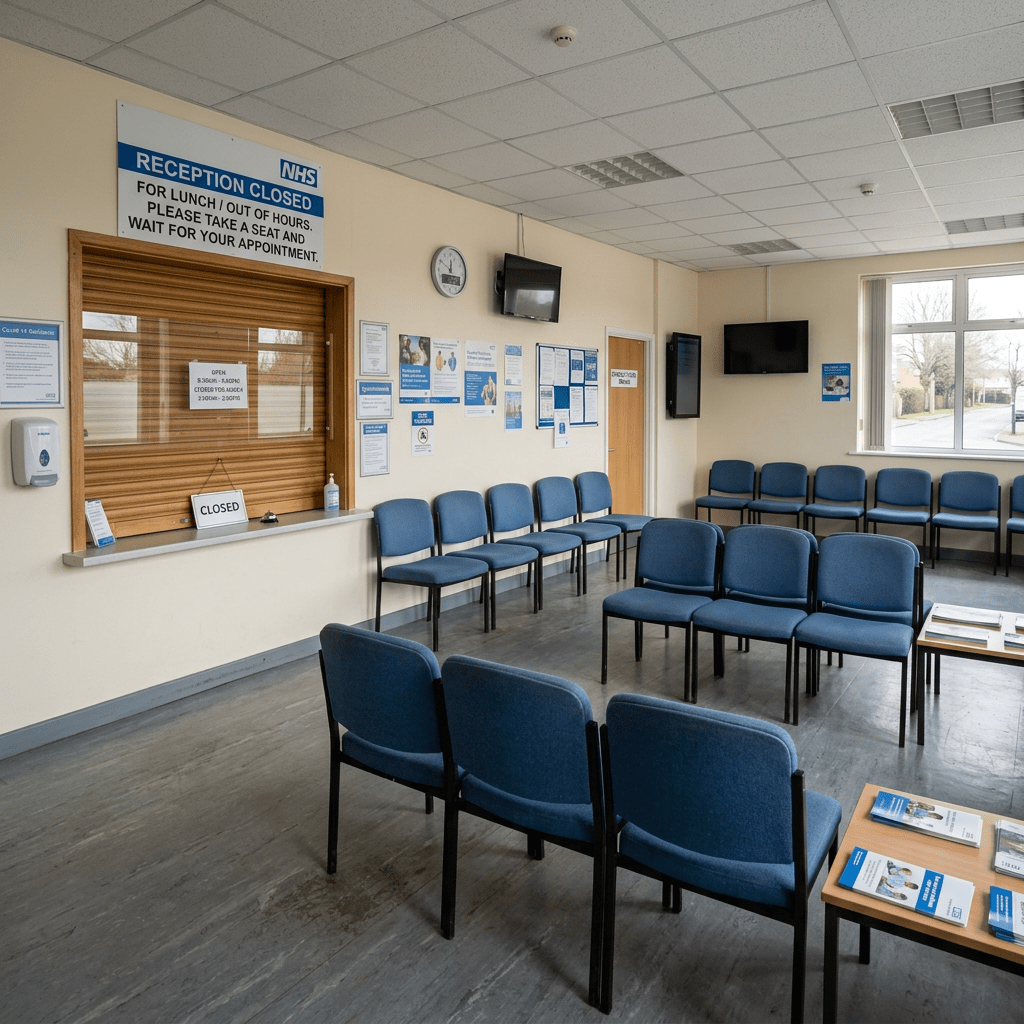
GP access in the UK is failing. Cancers are being caught too late. People are dying who did not have to. And the question nobody in power wants to answer is: how long have they known?
There is a question that health campaigners and ordinary patients are starting to ask out loud, and it deserves a serious answer. If people cannot get a GP appointment, and that delay means cancers and other life-threatening conditions go undetected until it is too late, then how many deaths could have been prevented? And if governments and health planners know this is happening, what does it say about the value they place on human life?
This is not scaremongering. It is arithmetic.
The Gateway Is Broken
The NHS is built on a principle that the GP is the first point of contact, the gateway through which everything else flows. A worried patient mentions a symptom. The GP listens. A referral is made. A scan is booked. A diagnosis is reached. Treatment begins.
That chain of events saves lives, but only when the first link holds.
In recent years, getting a GP appointment in the UK has become a serious challenge for millions of people. Practices are overstretched. Workforce shortages are severe. Demand is rising and supply is not keeping pace. The result is that people with genuine symptoms are waiting weeks, or giving up entirely, or being redirected to services that are not equipped to investigate the problem properly.
What Delay Actually Means
Cancer is not a condition that patiently waits while the system sorts itself out. The difference between a stage one and a stage three diagnosis can be measured in months. In some cancers, bowel, lung, ovarian and others, those months are the difference between curative treatment and palliative care. Between survival and death.
The NHS’s own “two-week wait” referral pathway exists precisely because speed matters. A GP who spots a red flag symptom and refers urgently can set that process in motion. But if the patient cannot get through the door in the first place, the two-week clock never starts.
Since the pandemic, late-stage cancer diagnoses have increased across the UK. Researchers and oncologists have linked this directly to the backlog in GP referrals and diagnostic testing. The figures are not small. We are talking about thousands of people whose conditions were detected too late because the gateway was blocked.
Excess Deaths and the Unanswered Questions
The UK has recorded excess deaths above historical averages for several consecutive years. Excess death figures capture deaths beyond what would normally be expected. Not all of them are explained by Covid. Health analysts have pointed to delayed diagnosis, reduced access to primary care, and the consequences of undetected conditions as contributing factors.
These are not hypothetical risks. They are documented outcomes with real people behind them.
Negligence or Intent? The Question That Matters
Here is where the argument becomes uncomfortable, but it needs to be made plainly.
If the consequences of inaccessible primary care are predictable, and they are, and if those consequences have been predicted repeatedly by medical bodies, patient groups, and independent researchers, then what does it mean when policy does not change?
At some point, the moral distinction between negligence and indifference becomes very thin. A government that knows a system is failing, knows people are dying as a result, and chooses not to act with urgency, is making a choice.
It may not be a deliberate plan to reduce the population. But the effect is the same. Preventable deaths are not being prevented. That is a statement of fact, not a conspiracy theory.
Who Bears the Burden
The people most affected by GP access failures are not, by and large, those with private health insurance. They are older people, people with chronic conditions, people in rural areas where services are already stretched thin, people who cannot afford to go private, and people who lack the confidence or capacity to keep pushing when they are turned away once.
For communities already managing complex health needs, the stakes are particularly high. A person managing a long-term condition who develops something secondary and cannot get it investigated promptly is facing a compounded crisis that the system is, in effect, creating for them.
What Needs to Happen
The workforce crisis in general practice requires urgent, sustained investment. That means training more GPs, retaining the ones already qualified, and properly funding practices in underserved areas. It means investing in diagnostic capacity so that when referrals are made, they can be acted upon quickly. It means treating primary care not as a cost to be managed, but as the foundation of a functioning health system.
None of this is new. All of it has been said before. The fact that it keeps being said, and the system keeps failing, is itself the story.
A Final Word
People are dying from conditions that could have been caught. The route to catching them runs through a GP surgery door that too many people cannot open. Whether that is the result of under-investment, poor planning, political choices, or something more deliberate is a question worth asking. What is not in doubt is the outcome.
A health system that cannot be accessed is not a health system. It is a waiting room. And for some people, the wait is fatal.
John Scotter is a writer and community advocate based in Halkirk, Caithness, Scotland.


Leave a comment