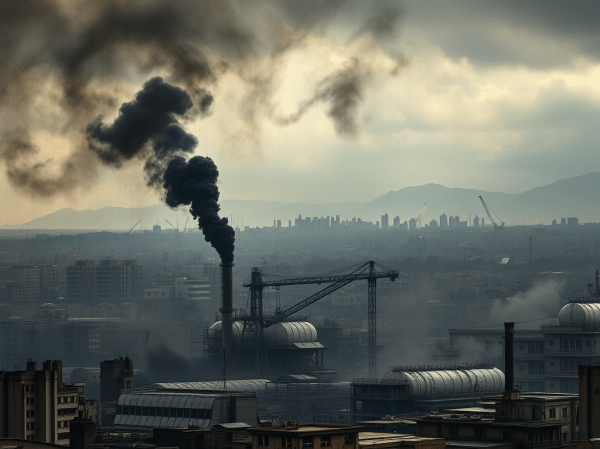
Iran Ceasefire: Key Insights and Implications

The Two-Week Breath: Why the US-Iran Ceasefire is a Beginning, Not an End

In the small hours of Wednesday morning, the world breathed. A two-week ceasefire between the United States and Iran was announced, brokered not by the great powers, but by Pakistan, a nation working the phones through the night while the rest of the world watched deadlines tick down.
Markets surged. Fuel prices began to fall. People who had spent weeks dreading the next headline allowed themselves, cautiously, to hope.

The Reality of a “Hands on the Trigger” Peace

But hope, as history repeatedly reminds us, is not a peace agreement. And what was agreed on Tuesday night is emphatically not peace. Iran’s Supreme National Security Council accepted the ceasefire with a statement that left little room for comfort:

“It is emphasised that this does not signify the termination of the war. Our hands remain upon the trigger.” These are not the words of a nation laying down its arms. They are the words of a nation catching its breath. The question that matters is not whether the ceasefire exists, it does for now, but whether it can become something more lasting.

What Was Actually Agreed (and What Was Not)

The ceasefire centres on one practical achievement: the reopening of the Strait of Hormuz. * The Stake: This waterway carries roughly one-fifth of the world’s oil and gas.

  • The Impact: Its closure since late February sent fuel prices soaring by nearly 40% globally, rattling economies from Tokyo to London.
  • The Terms: Iran agreed to allow safe passage via “coordination with Iranian armed forces,” while the U.S. agreed to suspend its bombing campaign.
    While both sides claim victory, the “coordination” clause means Tehran retains a hand on the global economic valve. This is not a resolution; it is a warning sign.

The Obstacles That Remain

The gap between a two-week pause and a lasting settlement is vast. Iran’s 10-point peace proposal includes demands that would be extraordinarily difficult for any American administration to accept:

  • The withdrawal of all US combat forces from regional military bases.
  • The lifting of all sanctions and the release of frozen Iranian assets.
  • Financial reparations for war damages.
  • Crucially, recognition of Iran’s right to continue nuclear enrichment.
    Meanwhile, Israel has accepted the ceasefire regarding Iran while simultaneously declaring that it does not apply to Lebanon. As Prime Minister Netanyahu continues the fight against Hezbollah, the risk of the ceasefire fraying at the edges remains an hourly concern. Even now, hours after the announcement, the world is not yet quiet.

The Role of the Unlikely and the Overlooked

The decisive intervention did not come from Washington or Brussels. It came from Pakistan’s Prime Minister Shehbaz Sharif and his army chief. Working quietly as intermediaries, they asked for a gesture of goodwill and more time when the “Great Powers” could not.
Similarly, Britain has been pursuing a parallel track. Keir Starmer has built a coalition of around 40 nations focused on the unglamorous, technical work of minesweeping and protecting shipping lanes. It is work that has attracted mockery from all sides, but the “Hormuz question” will outlast this ceasefire, and someone needs to be working it.

Will It Hold?

Ceasefires are not peace. They are the space where peace might become possible, if conditions are right and the gap between what each side needs and what each side can give is somehow bridged.
The apocalyptic language of Tuesday—“a whole civilisation will die tonight”—has, for the moment, given way to the quieter, harder language of negotiation. History does not reward certainty in these moments. The most durable peace agreements are often born not from strength, but from exhaustion—the sudden shared recognition that the alternative is worse.
Perhaps that recognition is present here. Perhaps not. What is certain is that the next two weeks will tell us more about the shape of the world for years to come than any news cycle of the past decade.
Looking Forward: A Call for Reflection as We Enter 2026

Looking Forward: A Call for Reflection as We Enter 2026

As we stand at the threshold of a new year, many of us engage in the familiar ritual of looking back reflecting on what the previous twelve months brought to our lives and to the world around us. But this year feels different. Looking back at 2025 leaves me with a heaviness that’s difficult to shake. It was, without exaggeration, one of the most troubling years I can remember.

Rather than dwelling on what’s passed, I believe we must turn our gaze forward with determination. We need to approach 2026 with a conviction that the troubling patterns of 2025 cannot continue unchecked.

The State of Our Society

I’m deeply concerned about the erosion of free speech. People sitting in prison cells today for voicing concerns about social issues this should alarm us all. Whatever we think about the specific views expressed, the principle at stake matters enormously. These individuals face the daily reality of imprisonment, and we owe it to ourselves and to them to ask hard questions about how we got here.

The prevailing ideological currents often labeled as “woke” have, in my view, lost their moorings. What may have begun with good intentions has morphed into something that seems disconnected from practical wisdom and common sense. I believe 2026 will be a year when many of these contradictions become impossible to ignore.

The Net Zero Paradox

Consider our approach to environmental policy. Net zero initiatives, consuming trillions of pounds, represent what I can only describe as a form of collective confusion. We’re pouring resources into projects that may not deliver their promised benefits, all while the foundations of our society healthcare, infrastructure, basic services crumble from neglect.

The irony is profound: we claim to be protecting our future while allowing the present to deteriorate around us.

The Money Game

Our economic system has become increasingly abstract and divorced from human needs. We’ve reached a point where money generates money through overnight trading and financial instruments, yielding returns that dwarf what any manufacturer or producer of actual goods could hope to achieve. Retail businesses the traditional connection between commerce and community are now viewed as inefficient drains on capital.

When governments seem to prioritize the interests of this financial system over the wellbeing of actual people, we have to ask: who is this all for?

AI: A Different Kind of Intelligence

We find ourselves at what may be a pivotal moment in human history. Artificial intelligence is accelerating development across technology, medicine, and countless other fields. Here’s what strikes me as potentially significant: AI operates without greed, without emotional bias, without the personal agendas that cloud human judgment.

I’m not suggesting AI should “take over” that’s neither desirable nor likely what I mean. But could AI offer something valuable by presenting logical solutions and clear-eyed analysis that cuts through the emotional reactivity dominating our current leadership? It’s worth considering.

The Spiritual Dimension

Where is God in all of this? Some might wonder if that question even belongs in a discussion of politics and society. But I believe it’s the most important question we can ask.

God stands at the head and heart of everything. The ancient instruction to love others as we would wish to be loved remains as relevant and challenging today as it has ever been. We are, whether we recognize it or not, in the midst of a spiritual conflict that has been unfolding since the beginning of time.

Understanding what’s happening around us truly seeing it—requires spiritual awareness. When we neglect the spiritual dimension of human existence, we create a kind of wilderness in our souls. This spiritual emptiness manifests in the mental health crises and social fragmentation we see everywhere today.

As a Christian, my path forward involves seeking guidance from the Holy Spirit, asking for wisdom to see clearly and act rightly. Your path may look different, but I’d encourage everyone to seek spiritual truth in its purest, most authentic form.

A Way Forward

So let 2026 be a year of reflection rather than reaction. Let’s move forward with love rather than hate.

This doesn’t mean we must embrace everything labeled as “diverse” or “progressive” without discernment. Real love requires honest assessment. We need to look carefully at our systems, rules, and processes and ask a simple but profound question: Do these actually fulfill the principle of loving others as ourselves?

That’s the measure that matters. Not whether something sounds good or aligns with fashionable thinking, but whether it genuinely serves human flourishing and reflects genuine care for one another.

The challenges ahead are real, but so is the possibility of renewal. Let’s meet this new year with clear eyes, open hearts, and a commitment to seeking truth and goodness wherever they may be found.​​​​​​​​​​​​​​​​

Website Powered by WordPress.com.

Up ↑