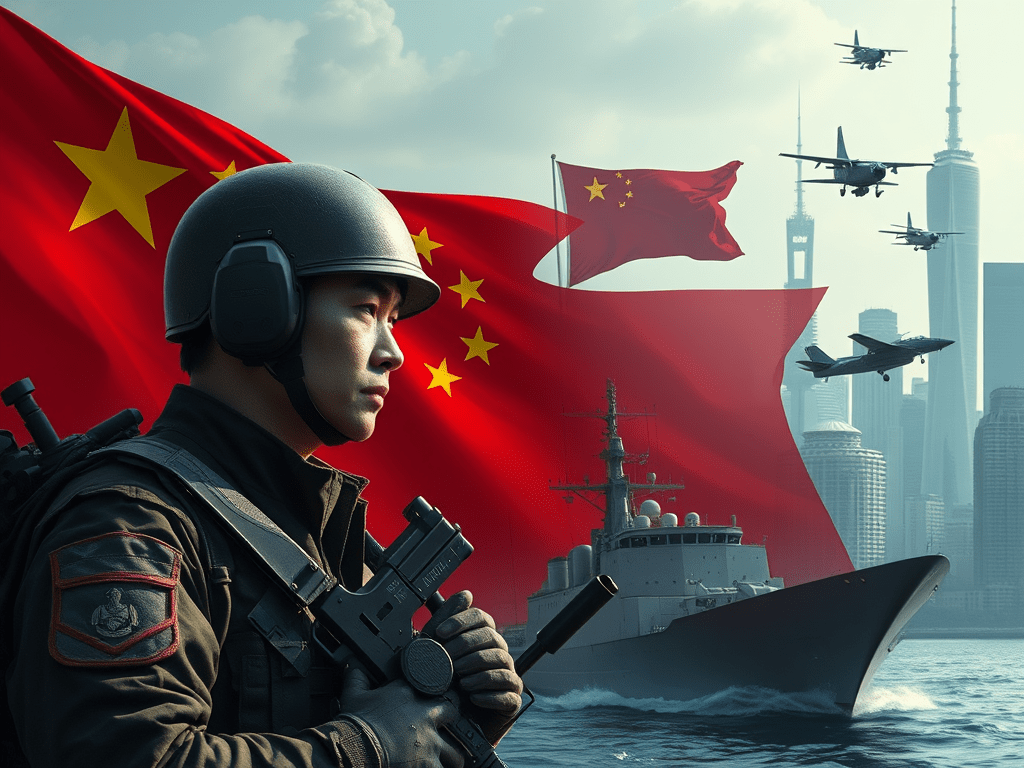
The dominant narrative in Western media portrays China as an emerging threat to the international order. But what if this framing tells us more about Western insecurities than Chinese intentions? A closer examination suggests that China’s behavior may be primarily defensive, shaped by historical trauma and legitimate security concerns closer to home.
The Defensive Posture Argument
China’s actions don’t occur in a vacuum. The country’s leadership frequently invokes the “century of humiliation” the period from the 1840s to 1940s when foreign powers carved up Chinese territory and imposed unequal treaties. From this perspective, China’s military modernization and assertiveness aren’t about expansion but about ensuring that such subjugation never happens again.
Consider the military context: Western naval presence in the Asia-Pacific, extensive alliance networks, and regular patrols near Chinese waters all preceded China’s current military buildup. Chinese officials argue they’re responding to encirclement, not initiating aggression. The artificial islands in the South China Sea, often cited as evidence of expansionism, might alternatively be understood as attempts to secure maritime approaches and prevent potential blockades.
The Real Anxiety: Technological and Social Competition
Perhaps the deeper source of Western concern isn’t military capability but something more fundamental China has achieved technological and manufacturing prowess that rivals or exceeds Western capabilities, and it’s done so under a completely different political system.
China now leads in green technology, high-speed rail infrastructure, mobile payment systems, and certain artificial intelligence applications. Its manufacturing scale and efficiency remain unmatched globally. The country has lifted hundreds of millions out of poverty while building world-class cities and infrastructure at a pace that makes Western development look sluggish.
This success challenges a core Western assumption: that economic development inevitably leads to liberal democracy. China’s state-directed capitalism and authoritarian governance have delivered results that create genuine cognitive dissonance for those who believed free markets required minimal state intervention and that political freedom was essential for innovation.
The West isn’t just concerned about military competition – it’s anxious about ideological competition. China offers an alternative model that appears to work, at least by certain metrics, and that’s profoundly unsettling to societies that have long assumed their political and economic systems represented the inevitable endpoint of development.
The India Factor: A Closer Threat
While Western commentators focus on trans-Pacific tensions, China’s most immediate security concerns may actually lie along its southwestern border.
The Sino-Indian relationship is complex and fraught with genuine tensions that have nothing to do with Western involvement. The two nuclear-armed giants share a disputed border where deadly clashes have occurred as recently as 2020. They compete for influence across South Asia and the Indian Ocean. India’s growing population, economic potential, and strengthening ties with Western powers likely represent a more immediate strategic concern for Beijing than abstract ideological competition with distant Western nations.
Unlike Taiwan or the South China Sea disputes, which China can frame as internal or historical matters, the India challenge is external, unpredictable, and growing. A rising India with demographic momentum, increasing military capability, and complex nationalist politics may represent the kind of instability and potential threat that genuinely keeps Chinese strategists awake at night.
The Self-Fulfilling Prophecy Problem
There’s a dangerous circularity to the current dynamic. Western rhetoric about the “China threat” justifies military buildups and alliance strengthening. China interprets these moves as confirming its fears of containment and responds with its own military expansion and assertiveness. This validates Western concerns, leading to further escalation. Both sides can point to the other’s actions as proof of hostile intent.
This security dilemma spiral risks creating the very conflict both sides claim to want to avoid. If China is indeed acting primarily from defensive motivations, then Western threat inflation becomes not just inaccurate but actively counterproductive, pushing China toward the very behavior the West fears.
A More Nuanced View
None of this means China’s government is beyond criticism. Surveillance systems, restricted speech, policies in Xinjiang and Hong Kong, and pressure on Taiwan are legitimate concerns. The question is whether these make China a threat to the West specifically, or whether they represent internal governance approaches that the international community finds troubling.
Perhaps the real issue isn’t whether China threatens the West militarily, but whether the West can psychologically accept a world where a non-Western power achieves technological and economic parity under a different political system. That’s a more honest conversation than framing everything through the lens of military threat.
The challenge moving forward is distinguishing between genuine security concerns, competitive anxiety, and ideological discomfort. Only by doing so can we avoid stumbling into conflicts that serve neither side’s true interests while addressing the legitimate questions about governance, human rights, and international norms that do deserve serious discussion.

 John Scotter Blog
Leave a comment